Discovery
We build awareness and understanding by helping people define the problem, the future state, and the outcomes that matter.
IT+® > Journey
IT+® merges technical implementation with organizational effectiveness so people do more than receive a new system. They understand it, accept it, commit to it, act through it, and create measurable results.
More than implementation
Traditional implementation concentrates on getting technology installed, configured, integrated, tested, and launched. Those activities matter, but they do not guarantee that people will use the system well.
IT+® widens the work. We pay attention to the system and to the people working inside it. That includes how they learn, where confusion shows up, how confidence grows, and what helps a new habit stick in daily work.
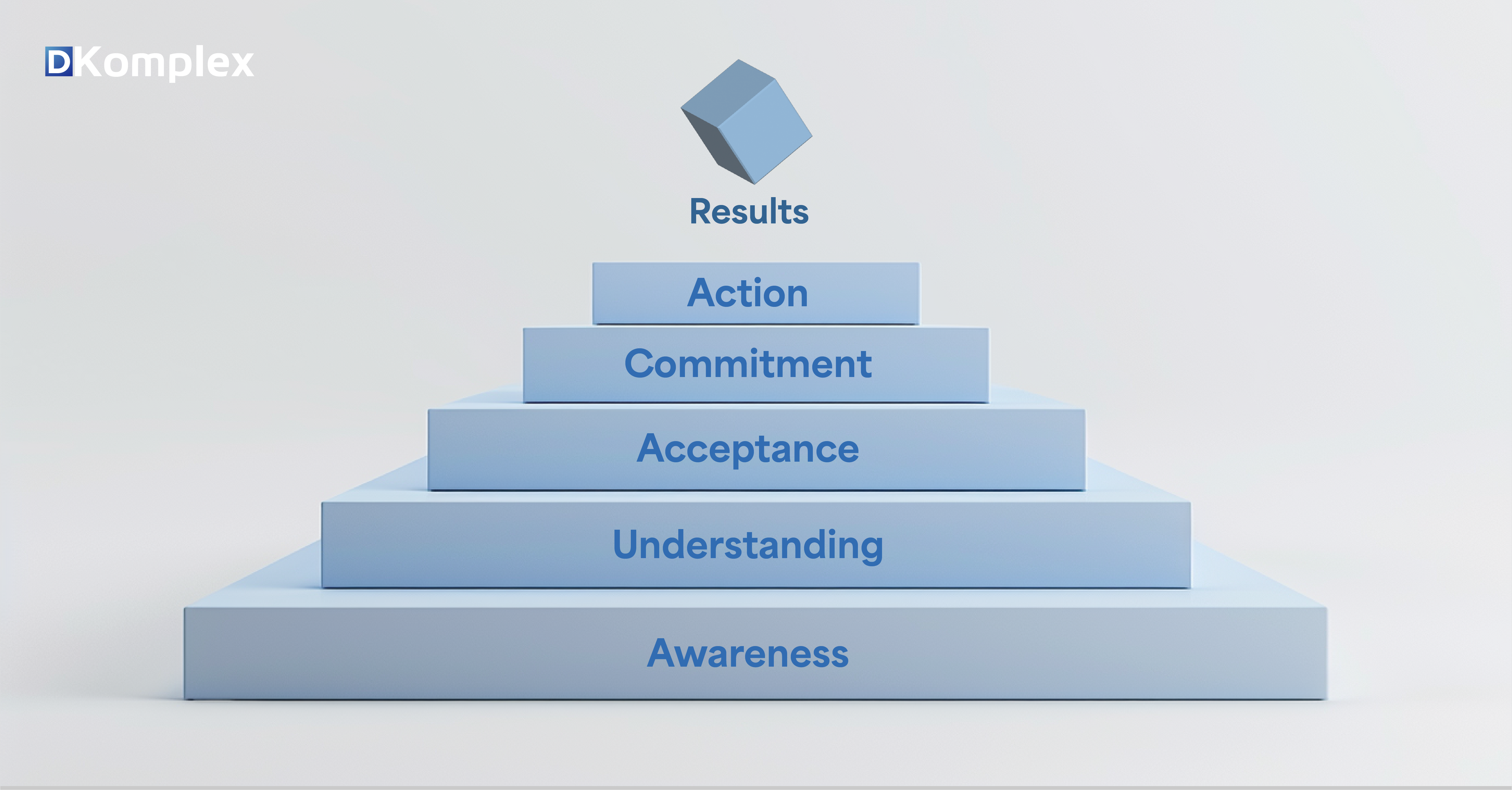
The Commitment Ladder
The stages build on one another, but movement is rarely perfectly linear. Different people move at different speeds. New questions can also send someone back a step. We keep listening, adjusting, and creating the conditions for the next move.
People know what is happening, why the project exists, and what outcomes the organization is pursuing.
People begin translating the system into their own roles, responsibilities, and workflows.
People can see the value, believe the approach is workable, and start releasing attachment to the old way.
Stakeholders choose to support the work, contribute time, and reinforce the behaviors needed for success.
The new system becomes part of real work, not merely something people were trained on.
Usage becomes performance: better visibility, cleaner handoffs, stronger accountability, improved service, and measurable return.
Pervasive by design
We build awareness and understanding by helping people define the problem, the future state, and the outcomes that matter.
We create acceptance by involving users in workflows, priorities, prototypes, and tradeoff decisions.
We strengthen commitment through visible progress, iterative feedback, and shared accountability for decisions.
We move from understanding to action through role based practice built around real work, not generic features.
We reinforce action with support, clear expectations, leadership participation, and rapid response to friction.
We measure use, listen to users, refine workflows, and help new behaviors become the way work gets done.
We connect activity to results, identify gaps, and decide together what should improve next.
Every improvement cycle can restart the ladder as people encounter new capabilities, roles, or expectations.
Three different outcomes
Communication, demonstrations, leadership framing, and early conversations establish awareness and begin building understanding.
Configuration, data migration, integration, testing, security, and training make the technology technically ready for use.
People accept the system, commit to the new way, act consistently, and produce results. This is where IT+® is especially effective.
Why IT+® is different
Short-term change interventions are useful, especially when a defined transition must be communicated and managed. IT+® also draws on organization development and effectiveness: a long term, participatory approach that builds the organization’s capacity to learn, adapt, and improve.
What this looks like in practice
When users leave a demo feeling overwhelmed but begin asking practical questions, we do not treat that as failure. It often means they are moving from awareness into understanding.
Rather than waiting until formal training, we may recommend short weekly touchpoints to build familiarity, answer questions earlier, reduce anxiety, and help people imagine how the system fits their work. That strengthens training, improves confidence, and accelerates adoption.